I’ve received so many questions if tribact cream works perfectly for the face and also other parts of the body which shall be discussed in this article.
But before we continue, let’s first of all understand the meaning of this cream especially for the sake of those who are hearing about it for the first time.
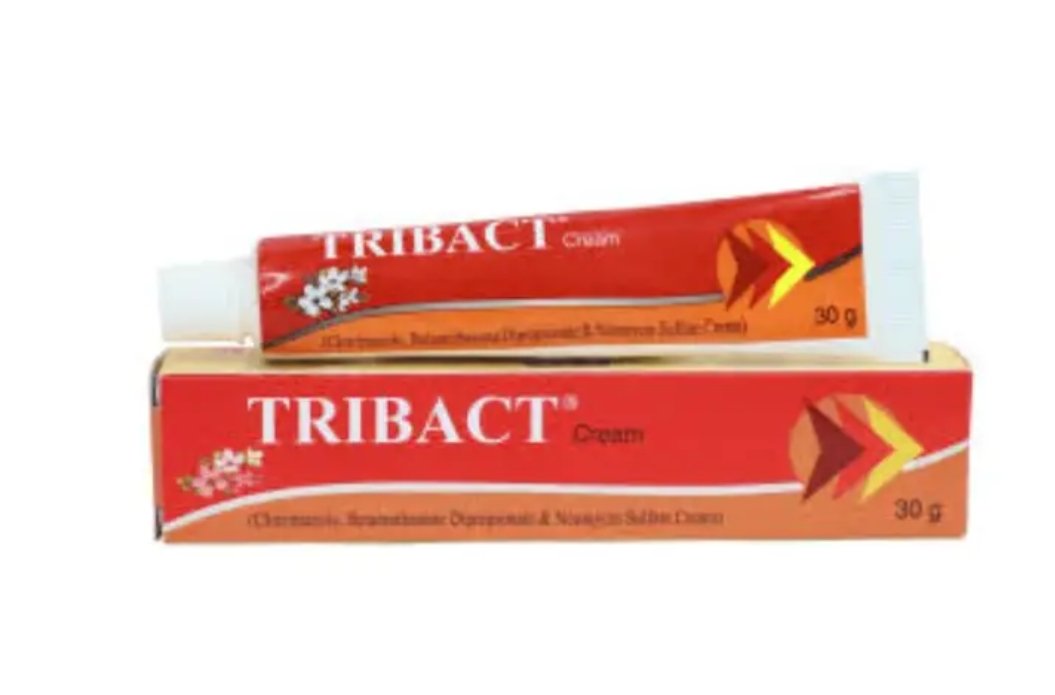
What is Tribact Cream?
Tribact Cream is a triple-action skin treatment made to handle several skin problems at once.
It helps clear fungal infections like ringworm and athlete’s foot, fights bacteria that cause sores or irritation, and eases inflammation from conditions such as eczema, dermatitis, or allergic rashes.
With its blend of an antifungal, an antibiotic, and a mild steroid, Tribact not only treats the infection but also calms itching, redness, and swelling, allowing the skin to heal faster and feel more comfortable.
Because of this mix, people often reach for Tribact when one cream alone doesn’t seem enough. But it’s powerful so it should be used carefully and usually only on a doctor’s advice.
Having known this, let me show you the basic ingredients the Tribact cream is made of.
can i use tribact cream on my face
No, you shouldn’t use Tribact Cream on your face unless a doctor specifically prescribes it. The steroid in it can thin out facial skin, cause dark patches, or even trigger pimples and rashes. For face problems, it’s safer to use creams made especially for facial skin.
But many people use it on their faces!
You’re right a lot of people do call Tribact (and even Funbact-A) a “facial cream.” Many use it to quickly clear pimples, rashes, or to lighten their face. And yes, it often seems to work at first, the steroid in it reduces redness and swelling, so the skin looks smoother for a short while.
But here’s the catch: that effect doesn’t last. With time, the same steroid can thin out the skin, cause dark patches, trigger breakouts, or leave permanent marks.
That’s why dermatologists strongly warn against using it as a daily face cream.
So even though people know it as a “facial cream,” the truth is it was never designed for that purpose. It’s actually meant for treating certain fungal and bacterial infections on the body and only for short-term use under medical advice.
Tribact Cream Basic Ingredients and Functions
Let’s see some of the ingredients the cream is made of and the basic functions.
-
Clotrimazole 1% w/w
This is the antifungal part of the cream. It kills fungi that cause infections like ringworm, athlete’s foot, or jock itch. Think of it as the “fungus fighter.”
-
Betamethasone Dipropionate (0.05% w/w as Betamethasone)
This is a steroid medicine that calms the skin. It reduces redness, itching, and swelling caused by conditions like eczema, allergies, or irritation. It doesn’t cure the infection itself, but it makes the skin feel and look better while healing.
-
Neomycin Sulfate (0.5% w/w as Neomycin base)
This is an antibiotic. It fights bacteria that can cause skin infections or make a fungal rash worse if left untreated. Basically, it stops bacteria from growing in the affected area.
-
Chlorocresol 0.1% w/w
This is a preservative. Its job is to keep the cream fresh, safe, and free from contamination while it’s in the tube.
-
Cream base (q.s.)
This is the cream itself : The smooth, white mixture that carries all the active medicines. It usually contains moisturizers, stabilizers, and water so the cream spreads easily on your skin
-
Tribact Cream vs Tribact CV Tablets: Why the Confusion?
If you’ve ever searched for Tribact, chances are you’ve come across two very different products: Tribact Cream and Tribact CV Tablets. They share the same name, but here’s the truth. “these are not the same medicine at all. In fact, mixing them up can lead to serious misuse.”
Let’s break it down in plain language so you’ll never confuse them again.
Tribact is one of those names that can cause a bit of confusion, because it actually refers to two very different medicines. On one side, you have Tribact Cream, which is designed for the skin.
It’s often called a triple-action cream because it combines three powerful medicines in one. It fights fungal infections such as ringworm and athlete’s foot, tackles bacteria that can cause sores or make skin problems worse, and at the same time calms redness, swelling, and itching from conditions like eczema or dermatitis like we explained earlier.
You simply apply it to the affected area, and it works directly on the surface of your skin where the problem is.
On the other side, there’s Tribact CV Tablet, which has nothing to do with skin creams. This one is an oral antibiotic that you swallow, and it’s used for bacterial infections inside the body.
Doctors usually prescribe it for issues like chest infections, pneumonia, sinus problems, urinary tract infections, and sometimes even certain skin infections. Instead of working on the outside like the cream, the tablet works deep inside your body to fight bacteria from within.
So while the two products share the same name, their purposes are completely different. One helps you heal skin troubles from the outside, while the other targets bacterial infections on the inside. Knowing the difference can save you from a lot of confusion and make sure you’re getting the right treatment for the problem you actually have.
Is Tribact Cream Safe for Children and Babies?
If you’re a mom, it’s natural to worry when your little one develops a rash or skin irritation. You might come across Tribact Cream and wonder if it’s safe to use on your baby’s delicate skin. Here’s what you need to know.
Tribact Cream is a strong medicine that combines three drugs: an antifungal (for fungal infections), an antibiotic (for bacterial infections), and a mild steroid (to reduce swelling and itching). While this mix can be very effective in adults, babies’ skin is much thinner and far more sensitive.
Steroid creams like the one in Tribact can sometimes cause side effects in children, such as skin thinning, irritation, or even absorption into the body if used too often or on large areas.
Doctors usually recommend gentler treatments for babies and toddlers, depending on what’s causing the rash. For simple diaper rashes, allergies, or eczema, mild creams without steroids are often safer choices.
Tribact might only be prescribed for a child if the infection is confirmed and other safer creams haven’t worked.
So if you’re thinking about using Tribact Cream on your baby, the safest step is to talk to your pediatrician first. Don’t apply it just because you have it at home or because someone suggested it.
it’s always better to let a doctor decide if it’s the right treatment for your child’s skin.
Can Tribact Cream Be Used for Pimples or Acne?
If you’re struggling with pimples, it’s easy to reach for anything that promises fast results. Many people wonder if Tribact Cream might work, since it fights infections and calms irritated skin. But here’s the thing, Tribact wasn’t made for acne.
Pimples usually come from clogged pores, excess oil, and skin bacteria that are very different from the infections Tribact is designed to treat. The steroid in it can actually make acne worse. Instead of clearing your skin, it might leave you with more breakouts, thinner skin, or even dark patches over time.
So if your goal is to get rid of pimples, Tribact isn’t the answer. You’ll have much better results with treatments made for acne “like benzoyl peroxide, salicylic acid, or creams your doctor recommends.” Those are safer, more effective, and won’t damage your skin in the long run.
Does Tribact Cream Lighten Dark Spots or Change Skin Tone?
This is a really common question, especially for people dealing with dark marks after rashes, pimples, or skin infections. Because Tribact Cream has a steroid in it, some believe it can “fade” spots or even lighten the skin. But the truth is, Tribact isn’t meant for that.
The cream is made to treat infections and reduce redness, swelling, and itching and not to brighten the skin.
In fact, using it just to lighten dark spots can backfire. The steroid in Tribact may temporarily make the skin look lighter, but over time it can thin your skin, cause stretch marks, and even lead to uneven patches that are harder to treat.
If you’re worried about dark spots or uneven skin tone, the safer option is to go for creams or treatments specifically made for hyperpigmentation, things with ingredients like vitamin C, niacinamide, or dermatologist approved lightening products.
These target the spots directly without risking long term damage.
So, while Tribact might look like it’s helping at first, it’s not a safe or reliable way to lighten dark marks or change your skin tone.
How Does Tribact Cream Compare to Other Similar Creams Like Funbact-A or Quadriderm?
If you’ve ever walked into a pharmacy, you’ve probably noticed that Tribact Cream isn’t the only one of its kind. There are others with very similar names, like Funbact-A and Quadriderm.
At first glance, they all seem to do the same job and that’s why a lot of people get confused.
The truth is, all these creams are part of the same “family” of treatments. They usually contain a mix of three things as usual and that’s why they’re often called “triple-action” creams.
The difference between them lies in the specific ingredients and the strength of each medicine.
In simple terms, they work in almost the same way, but some may be a little stronger than others, or better suited for certain conditions. This is exactly why it’s risky to pick one off the shelf just because it sounds familiar.
The wrong choice or using it without guidance can lead to side effects like thinning of the skin, stubborn dark patches, or even infections that get worse instead of better.
So while Tribact, Funbact-A, and Quadriderm may look and sound alike, the safest move is always to use the one your doctor actually prescribes for your specific skin problem.
What Happens If You Use Tribact Cream for Too Long?
Tribact Cream can do a lot of good when it’s used properly, but it’s not the kind of cream you should keep applying for weeks or months at a time. Using it longer than recommended often causes more harm than help.
The steroid inside Tribact can slowly weaken the skin if it’s overused. This may show up as thinning skin, stretch marks, or stubborn dark patches that don’t fade easily. Instead of healing, your skin may become more sensitive and even more irritated.
There’s also the risk that the fungi or bacteria you’re trying to treat stop responding, which means the infection could come back even stronger.
So, while Tribact can be a great short-term treatment, it’s never meant for long-term use. If you feel like you need to keep applying it, that’s usually a sign that something else is going on and it’s best to let a doctor take another look. That way, you’ll get the right treatment without putting your skin at risk.
Can I Use Tribact Cream on My Private Part?
I get this question a lot, and honestly, it makes sense. When you’re uncomfortable “down there”
itching, burning, or seeing a rash. the first instinct is to grab the strongest cream you know, and for many people that’s Tribact. But here’s the straight answer: Tribact Cream is not meant for private parts.
Here’s why. The skin around your genitals is much thinner and more sensitive than the skin on your arms or legs.
Tribact isn’t just an antifungal; it also has an antibiotic and a steroid mixed in. The steroid can cause real problems in such a delicate area it can thin the skin, create irritation, and even allow the fungal infection to spread instead of heal. If what you’re dealing with is a fungal infection like jock itch, vaginal yeast, or a rash around the groin, you’ll be better off using gentle antifungal creams like clotrimazole or miconazole.
These are the ones doctors usually recommend for private areas because they fight the fungus without being too harsh. And for women with yeast infections inside the vagina, there are special creams or tablets made just for that.
So, I know it’s tempting to think “the stronger the cream, the faster I’ll heal,” but in this case, stronger isn’t safer. Your private parts need something gentle and targeted, not a heavy steroid mix. If the problem doesn’t get better in a week or keeps coming back, that’s your signal to see a doctor and get it properly checked.
User Reviews
So far, we have covered the side effects of Tribact Cream which you should probably look out for on every instance and also how this cream react on different cases but what exactly are people saying out there?
Let’s see some users reviews

My experience With Tribact Cream
I’ll be honest, I first used Tribact Cream out of frustration. I had this stubborn, itchy rash on my arm that wouldn’t go away no matter what I tried.
It was red, it looked bad, and it was making me super uncomfortable. A neighbor told me about Tribact, saying, “That cream works fast, try it.” So, I went to the pharmacy and picked one up.
The first time I applied it, it stung a little, but then the itching eased off. In few days, the rash was already looking better, and in less than a week, my skin was almost back to normal.
I felt so relieved like finally something worked.
But here’s the thing. Because it worked so quickly, I thought, why not just keep using it a bit longer so the rash never comes back? That’s where I went wrong.
After using it for a while, the skin in that spot started looking thinner and more sensitive. It wasn’t painful, but it didn’t feel right either.
That’s when I realized Tribact isn’t a cream you should use for every little thing or for too long. It’s strong, and it’s meant for short-term use only.
So, if you ask me about my experience yes, Tribact helped me a lot when I needed it, but it also taught me to be careful. Now I only use it when a doctor recommends it, and I stop as soon as my skin heals.

Nigerian Skincare Enthusiast & Certified Skincare Consultant with 5+ years of experience in reviewing skincare and body care products.